
Drywall Finishing | Drywall Taping | Drywall Repair | Plaster Repair | Ceiling Repair | Wall Repair | Drywall Installation | Drywall Hanging | Popcorn Ceiling Repair | Crack Repair | Hole in Ceiling | Hole In Wall | Interior Painting | Knockdown Texture | Water Damage Repair | Drywall Bathroom | Drywall Ceiling
Sound Proofing Contractor In Massachusetts
How We Block Noise in Walls and Ceilings
Soundproofing is an essential part of modern construction, whether you are building a recording studio, improving privacy in a home, or reducing noise in apartments and offices. Effective sound proofing methods focus on controlling how sound travels through walls, ceilings, and structural framing. This article provides a clear and practical overview of sound proofing methods, with special attention to metal isolation channels, sound board materials like Homasote, floating drywall systems, and special sound-blocking drywall boards.
Understanding How Sound Travels
Before choosing sound proofing methods, it is important to understand how sound moves.
Sound travels in two main ways:
Airborne sound – voices, music, television
Structure-borne sound – vibrations passing through studs, joists, and framing
Effective sound proofing methods reduce noise by using four principles:
Mass – heavier materials block sound
Decoupling – separating surfaces to stop vibration transfer
Damping – reducing vibration energy
Absorption – reducing echo inside cavities
Most professional soundproofing systems combine several of these techniques.
Metal Isolation Channels
What Are Metal Isolation Channels?
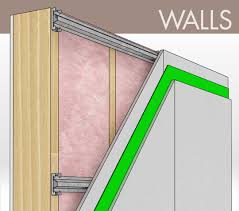
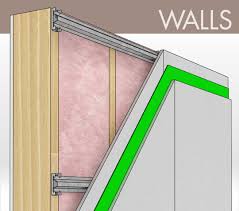
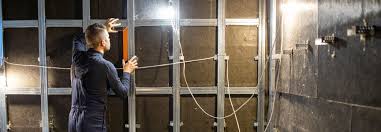
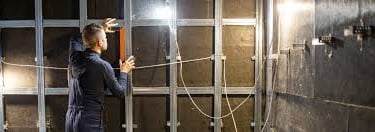
Metal isolation channels are thin, engineered steel channels installed perpendicular to wall studs or ceiling joists. Drywall attaches to the channels rather than directly to the framing, reducing vibration transfer.
Metal Isolation Channel systems are commonly used in:
Apartments and condominiums
Home theaters
Music studios
How Metal Isolation Channels Improve Soundproofing
Key benefits include:
Reduced structure-borne vibration
Improved sound transmission class (STC) ratings
Minimal loss of room space
When installed correctly, metal isolation channels can significantly reduce noise without major structural changes.
Floating Drywall Systems (Decoupled Drywall)
Drywall Installed Separate from Studs
One of the most effective sound proofing methods is creating a floating drywall system, where the drywall does not touch the studs directly.
This is achieved using:
Metal isolation channels
Resilient channels
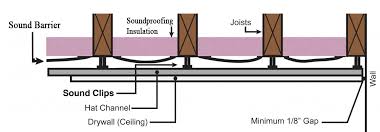
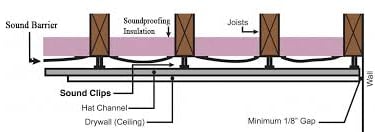
Sound isolation clips combined with channels
These metal channels allow the drywall to be attached floating separate from the studs, preventing vibration from traveling directly through the wall structure
Why Decoupling Works
Decoupling breaks the physical path sound vibrations use to move from one room to another. This method is especially effective for:
Low-frequency noise
Music and bass sounds
Impact noise from footsteps
Floating drywall systems are widely used in professional soundproofing designs.
Sound Board Materials (Homasote)
What Is Sound Board?
Soundboard is a dense fiberboard product designed to absorb and dampen sound vibrations. One of the most recognized soundboard materials is Homasote.
Homasote sound board is made from recycled paper fibers and is commonly installed behind drywall.
How Sound Board Improves Noise Control
Benefits of sound board include:
Added mass to walls and ceilings
Sound absorption within wall assemblies
Reduced echo and vibration
Sound board is not a complete soundproofing solution on its own, but it works very well when combined with drywall and isolation channels.
Special Sound-Blocking Drywall Boards
What Is Soundproof Drywall?
Special sound-blocking drywall boards are engineered panels designed to outperform standard drywall. These boards often include:
Multiple layers of gypsum
Damping compounds
High-density cores
They are sometimes referred to as “acoustic drywall” or “quiet drywall.”
Advantages of Sound-Blocking Drywall
Special sound-blocking drywall boards offer:
Higher STC ratings than regular drywall
Reduced sound transmission without complex framing changes
Faster installation compared to multi-layer systems
These boards are ideal for renovations where space and construction time are limited.
Combining Methods for Maximum Performance
Layered Sound Proofing Systems
The most effective sound proofing methods use multiple techniques together. A high-performance wall assembly may include:
Metal isolation channels
Sound board such as Homasote
Special sound-blocking drywall
Acoustic sealant at all seams
This layered approach targets airborne and structure-borne noise simultaneously.
Soundproofing Ceilings
Noise Control Between Floors
Ceilings require special attention because sound travels easily through floor framing.
Effective ceiling sound proofing methods include:
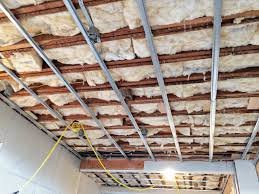
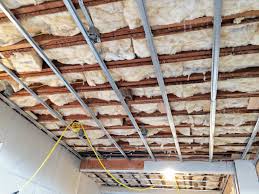
Metal isolation channels mounted to joists
Double-layer drywall with damping compounds
Insulation between joists
Floating ceiling drywall systems are especially effective in reducing footstep and impact noise
Common Soundproofing Mistakes to Avoid
Screwing drywall directly into studs when using channels
Leaving gaps around outlets or edges
Mixing incompatible soundproofing systems
Relying on foam panels alone for sound blocking
Attention to detail is critical for soundproofing success.
Frequently Asked Questions (FAQs)
1. Do metal isolation channels really work?
Yes. When installed correctly, metal isolation channels significantly reduce vibration transfer and improve soundproofing.
2. Is sound board like Homasote enough by itself?
No. Sound board works best when combined with drywall and RC1 channel decoupling methods.
3. What is the best soundproof drywall option?
Special sound-blocking drywall boards offer excellent performance with simpler installation compared to multi-layer systems.
4. Can drywall be floated without isolation channels?
Yes, but it typically requires double-stud walls or sound isolation clip systems, which are more complex.
5. How much noise reduction can I expect?
A properly designed wall can reduce sound transmission by 40–60 decibels, depending on materials and construction.
6. Is soundproofing expensive?
Costs vary, but combining methods strategically can deliver strong results without extreme expense.
Conclusion: Choosing the Right Sound Proofing Methods
Sound proofing methods are most effective when they address how sound actually travels through a building. Metal isolation channels, floating drywall systems, sound board materials like Homasote, and special sound-blocking drywall boards all play important roles in modern noise control. By combining mass, decoupling, damping, and absorption, you can create quieter, more comfortable spaces that perform well for years to come.
Home | Services | Contact | Offices | Faq | Service Area | Blog | Appointment | Drywall Finishing | Drywall Taping | Drywall Repair | Plaster Repair | Ceiling Repair | Wall Repair | Drywall Installation | Drywall Hanging | Popcorn Ceiling Repair | Crack Repair | Hole in Ceiling | Hole In Wall | Interior Painting | Knockdown Texture | Water Damage Repair | Drywall Bathroom | Drywall Ceiling | Soundboard | Drywall Patch | Black Mold | Ice Dam Roof Leak | Drywall over Plaster | Wallpaper Removal | Fix a Hole | Skim Coating | Popcorn Removal | Apartment Turnovers | Massachusetts | Western MA | Springfield | Chicopee | Ludlow | Wilbraham | Longmeadow | East Longmeadow | Monson | Palmer | Belchertown | Granby | Amherst | Hadley | Northampton | Easthampton | Westhampton | Holyoke | South Hadley | West Springfield | Hampden | Agawam | Westfield | Southampton | Southwick | Granville | Hatfield | Lenox | Beckett | Lee | Great Barrington | Stockbridge | Huntington | Middlefield | Pelham | Plainfield | Ware | Williamsburg | Worthington | Brimfield | Blanford | Holland | Montgomery | Tolland | Wales | Refund Policy | Privacy Policy | Terms and Conditions


600 East Main St Chicopee, MA, 01020
203 Circuit Ave n39, West Springfield, MA 01089