🏠 The Wilbraham Homeowner's Guide to Hanging Drywall
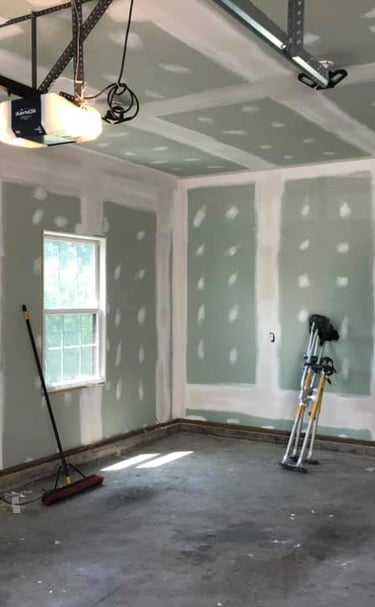
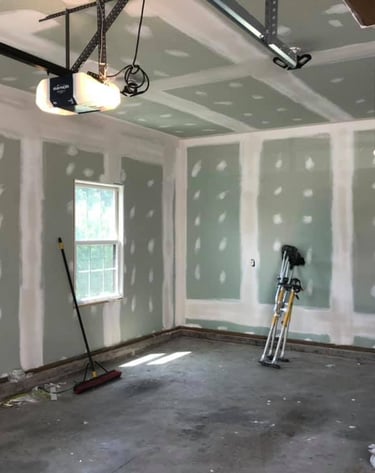
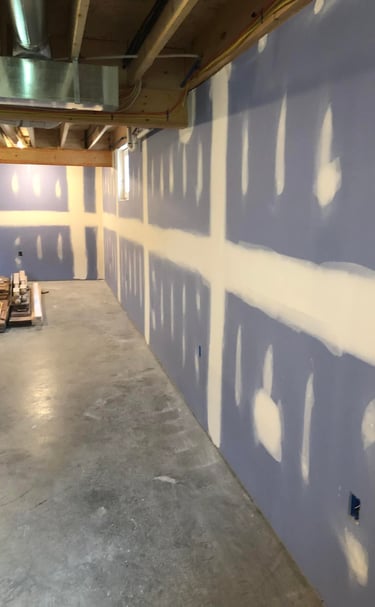
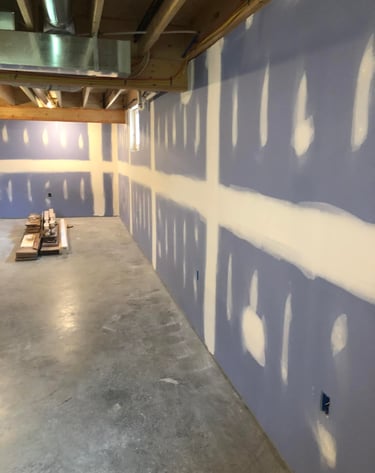
Working in a basement or a big repair in a town like Wilbraham means you need strong, moisture-resistant wallboard. Basements, especially, can have moisture issues, so always choose mold and moisture-resistant drywall, often called green board or purple board.
Before you start, make sure you've dealt with any water problems and sealed your masonry walls with waterproofing paint. Also, keep a dehumidifier running that maintains less than 50% percent humidity.
Installing New Drywall in Your Basement
When you're finishing a basement, planning your sheets is more important than you think!
Prep the Room: Inspect your wall framing. The wood studs should be straight and secure. If you're putting drywall on masonry, you need pressure-treated furring strips attached to the wall first. They should be centered 16 inches apart. You can also add rigid foam insulation between the strips for better performance.
Measure and Cut: Measure your walls and ceilings accurately. You want to use the longest sheets you can to reduce the number of seams you have to finish. Use a utility knife and a T-square to score the front paper, then snap the board back and cut the paper on the back.
Hang the Ceiling First: Start with the ceiling. Always hang the drywall sheets perpendicular to the ceiling joists for the best support and to prevent sagging.
Hang the Walls: Hang the top sheets first. Then, hang the bottom sheets, making sure to use a scrap piece of drywall or a kicker tool to pry the sheet up so it fits snugly against the top sheet. Pro Tip: Leave a small gap (about 1/2 inch) at the bottom between the drywall and the concrete floor to prevent moisture absorption and future damage.
Screw It In: Use drywall screws (not nails) for better holding power. Place screws every 12 inches into the wood framing. Use a screw gun with a depth setter to create a dimple (just below the paper surface) without tearing the paper. A torn paper means the screw won't hold well.
Stagger the Seams: Do not line up the short ends of the sheets (the butt joints) from one row to the next. Stagger them like bricks in a wall. This helps prevent long, visible cracks in your finished wall.
Heavy-Duty Fix: Installing New 1/2" Drywall Over Existing Ceilings
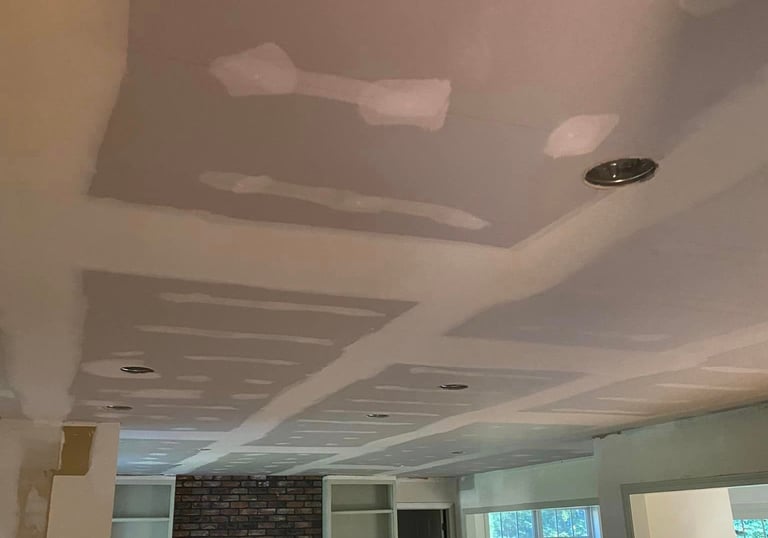
Sometimes, you need to cover up an old, uneven, or damaged ceiling without tearing it down. This is called laminating.
The key challenge here is making sure the new layer is screwed securely into the original wood framing underneath the old drywall or plaster.
Find the Joists: You need to find and mark the exact location of the ceiling joists (the wood framing). A good stud finder is a must, but you can also look for where the screws/nail heads are in the original ceiling. Snap a chalk line across the ceiling to mark the center of every joist.
Use Longer Screws: Since you are going through two layers of material, you must use longer drywall screws. Your goal is to get at least 1 inch of screw penetration into the wood joist itself. If you are using 1/2-inch drywall over an existing 1/2-inch layer, you will need screws that are at least 1 3/4 inches long, or more commonly, 2-inch drywall screws.
Secure It Tightly: When screwing in the new sheet, make sure it is tight against the old ceiling. Follow the same rule: screws every 12 inches along the joist lines you marked. The existing drywall acts as a "sandwich" layer, but your connection must go into the structural wood.
🩹 Repairing a Ding: How to Cut Out and Put Back Drywall
Big holes, like where you removed an electrical box or a major plumbing fix, need a strong patch that blends in perfectly.
Square Up the Hole: Use a utility knife or a drywall saw to cut the damaged area into a clean square or rectangle. Get rid of all the broken edges and loose material.
Measure and Cut the Patch: Cut a new piece of drywall (1/2-inch thick, same as your wall) that is slightly smaller than the hole—it should fit easily into the opening.
Create Backing (The Pro Secret): This is the part that makes the fix last. You need something to screw the new patch to, since you won't have studs there. Cut two strips of scrap wood (like 1x3 or 1x4) that are longer than the hole. Insert them into the hole and screw them to the back of the existing drywall on either side of the hole. These pieces of wood now become your "studs" for the patch.
Install the Patch: Place your new drywall patch into the hole and screw it into the wood backing pieces you just installed. Make sure the face of the patch is flush with the existing wall.
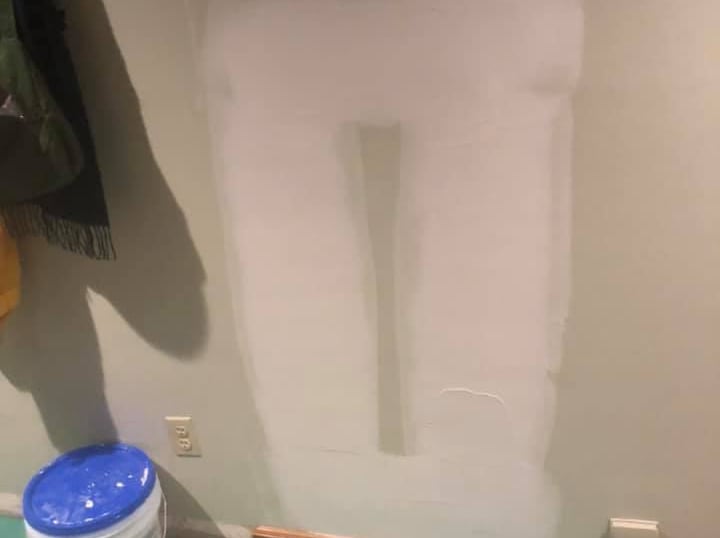
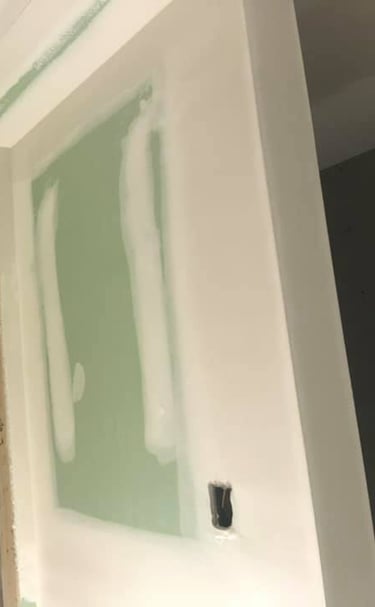
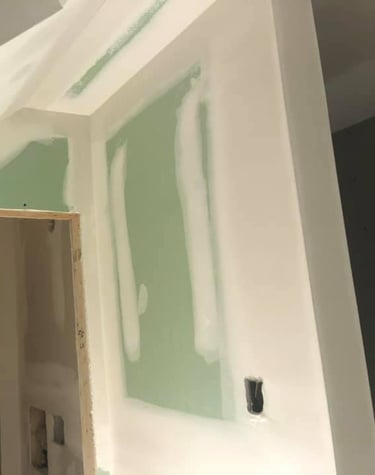
Finish Strong: Now you tape and mud the edges. Apply fiberglass mesh tape over the seams, then apply thin coats of joint compound, feathering the edges wide so the patch blends into the wall. Sand smooth after each coat until it disappears.