Choosing the Right Drywall for Your Bathroom and Basement. A guide for homeowners planning a bathroom or basement remodel. Moist areas require special drywall boards.
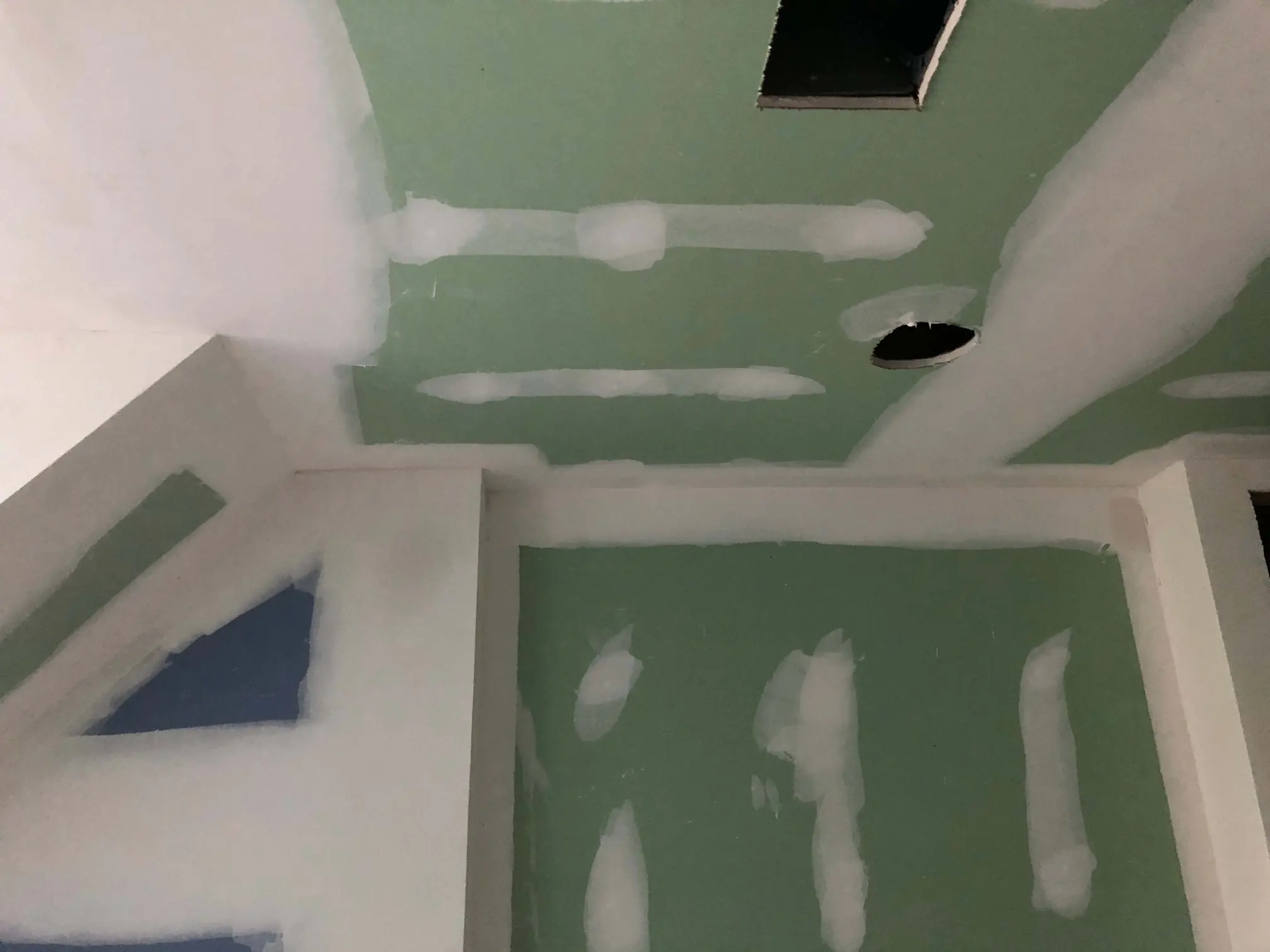
When you are remodeling your bathroom there comes a time when you have to Install the drywall. Your standing in the lumber aisle of a big-box store picking up drywall, it all looks pretty much the same: big, heavy, dusty sheets of grey, green. purple and even some that looks like cement. But picking the wrong "type" of gypsum board for your project is a mistake that usually smells like mildew and ends in a demolition crew. This guide goes over the type of drywall to use in your bathroom remodel and why.
Standard drywall is essentially a sandwich of pulverized gypsum and paper. In a bedroom, it's perfect. In a damp basement or a steamy bathroom? It’s basically a snack for mold. Here is how to pick the right board for the high-stakes areas of your home.
Bathrooms are localized tropical environments. Between the shower steam and the occasional "oops" from the tub, your walls are under constant hydraulic attack.
Basements are notorious for "wicking" moisture through concrete foundation walls. Even if your basement feels dry today, a heavy rainstorm can change the humidity levels in hours.
Q1: Can I just use regular drywall if I use "mold-resistant" paint? No. Mold-resistant paint is a great secondary defense, but if moisture gets behind the paint or seeps in through the outlets, standard drywall will rot from the inside out. Don't cheap out on the substrate.
Q2: Is Greenboard waterproof? No. It is water-resistant. If you submerge Greenboard in water, it will fail. It is designed to handle high humidity, not direct saturation.
Q3: Why is Purple board more expensive than Greenboard? Purple board (specifically from National Gypsum) is tested to handle both moisture and mold growth. It’s an all-in-one insurance policy for your walls. In a small bathroom, the price difference is usually less than $50 for the whole room, well worth it.
Q4: Can I use fiberglass mat (paperless) drywall in my bathroom? Absolutely. It’s actually a superior choice to Greenboard or purpleboard. The only downside is that it has a slightly textured "orange peel" finish due to the fiberglass, so it requires a skim coat if you want a perfectly smooth "eggshell" paint finish.
Q5: What thickness should I buy? For most residential surfaces, 1/2-inch is the standard. If you’re doing a ceiling where the joists are 24 inches apart, or if code requires type x, go with the 5/8" type x to prevent the "sag" and to meet the building code.
Are you planning to DIY the hanging and finishing, or are you just sourcing the materials for a pro? MrWalls Drywall & Painting Serves Western Massachusetts and Most of Connecticut. Call or Text us at (413)302-0640